Discover why Japan’s vacant homes attract foreign buyers—and why understanding earthquake risks and seismic standards is crucial before investing in property.

 JapanUnveiled.com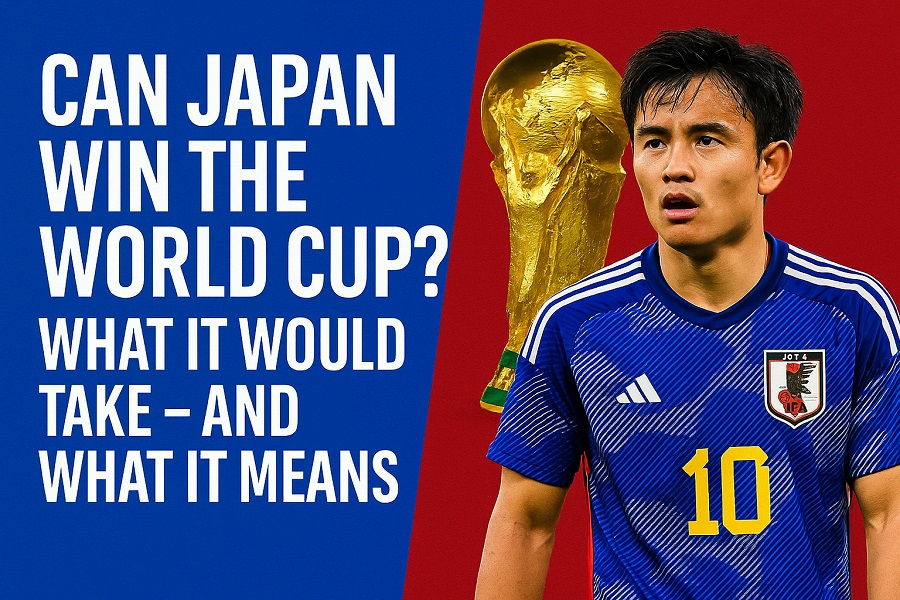
For decades, Japan has steadily climbed the ranks of international football. From their first FIFA World Cup appearance in 1998 to consistent qualifications ever since, the Samurai Blue have transformed from regional contenders into a team that global powerhouses can no longer ignore.
But can Japan actually win the World Cup?
The question is no longer naïve — it’s strategic. And the path toward that goal reveals more than football tactics. It reflects how Japan sees itself, how it changes, and how it dares to dream.
In past decades, Japan’s reputation in football centered on discipline, organization, and teamwork — often admired, but rarely feared.
That has changed. In recent tournaments:
Japan is now not just playing catch-up — it is contending.
The dream of winning the World Cup is no longer fantasy.
It’s a long shot — but a calculated one.
Japan’s biggest missing piece remains a clinical striker — someone who can finish chances under pressure, against world-class defenses, in the final minutes.
Building (or finding) that player is vital.
Top nations can replace injured stars without a major drop in quality.
Japan’s first 11 is strong, but to win a tournament, the bench must be just as sharp — especially in knockout stages.
Japan has often struggled in high-pressure knockout matches, including penalty shootouts.
Building a mental toughness culture, led by experienced internationals, sports psychologists, and high-stakes match exposure, is crucial.
Tactics must shift dynamically. Teams that win tournaments often make in-game and game-to-game adjustments with precision.
Japan needs leadership that embraces adaptability, not just structure.
Even the best teams need it — favorable draws, weather, refereeing decisions, moments of magic.
Winning a World Cup is never just about preparation.
If Japan wins the World Cup — or even reaches the final — the implications will go far beyond sport.
Japan has long been seen as an economic power, cultural exporter, and technological innovator.
A football victory would cement its status as a true soft-power superpower — with youth, emotion, and global influence on its side.
Japan is often cautious, careful, and modest. A World Cup title would challenge the national psyche — proving that bold ambition and global leadership are not just Western traits.
It would show a new generation of Japanese youth that:
"You don’t just belong on the world stage — you can dominate it."
Success on a global stage often ignites progress in other fields — from education and investment to urban development and national confidence.
Just as the 1964 Tokyo Olympics sparked a wave of modernization, a football triumph could fuel a new era of cultural and social renewal.
Winning a World Cup isn’t just about 11 players on a pitch.
It’s about a nation’s belief in itself.
The team may be nearly ready.
The system is evolving.
The question now is whether the country is ready to dream at that scale.
If Japan were to win the World Cup, it would be a sporting miracle — yes — but also a cultural moment.
It would symbolize:
And that is something worth pursuing — on and off the pitch.